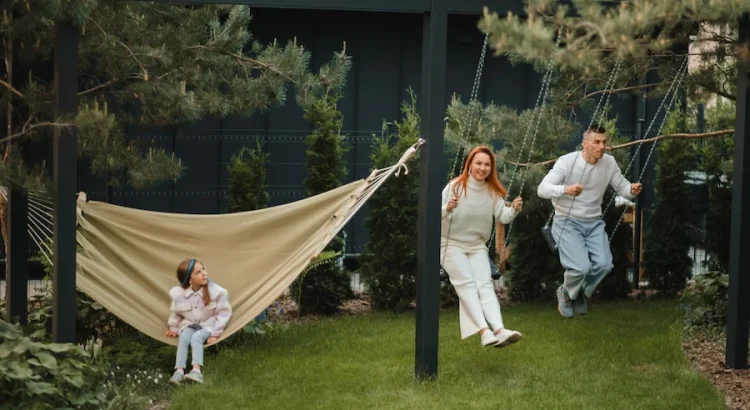
Every family has those memories that seem to linger longer than others. The smell of freshly cut grass, the chatter of neighbours over fences, and the echo of children’s laughter drifting through the evening air. For many, these sounds belong to afternoons spent outdoors, when time seemed to move a little slower and life felt a little lighter.
It wasn’t about planned activities or weekend outings. It was the small, everyday moments that made those days special. Kids would run barefoot through the lawn, make up their own games, and compete to see who could swing the highest or hang the longest from the monkey bars. Parents would watch from the porch, sometimes joining in, other times just smiling at the sight of their children enjoying the simple pleasures of outdoor play.
A Different Kind of Childhood
Childhood used to feel endless. Summer holidays stretched out like forever, and backyards became kingdoms, forts, or pirate ships. It didn’t take much—an old rope, a plank of wood, maybe a small garden patch—and suddenly adventure was everywhere.
There’s something magical about how children can turn the ordinary into the extraordinary. A small puddle becomes an ocean, a stick becomes a sword, and a simple swing becomes a flying machine. In those moments, imagination was the only limit.
Over the years, as technology crept into every corner of our homes, the idea of outdoor play slowly began to fade. Parents became busier, children found entertainment in screens, and backyards started to feel a little quieter. Yet, every once in a while, we still catch a glimpse of what used to be—a child running through the sprinkler, a family picnic on the lawn, or the gentle creak of a swing moving in the evening breeze.
That sound, especially, holds something nostalgic. Perhaps that’s why so many families today are rediscovering the beauty of simple Backyard Swings—they remind us of everything childhood should be.
Why Outdoor Play Still Matters
When children play outdoors, they don’t just burn energy—they grow. The physical movement strengthens their muscles and bones, but more importantly, it nurtures their creativity and confidence. Climbing, swinging, or even just exploring the garden teaches coordination and balance in ways that structured indoor play never can.
Parents who encourage outdoor play often notice subtle differences in their children. They sleep better, focus more, and seem happier. Nature has a grounding effect, something that even adults benefit from. Fresh air, sunlight, and the freedom to move combine to create an environment where both body and mind thrive.
Outdoor play also fosters independence. When children create their own games or test their limits on the swings, they learn decision-making, patience, and problem-solving. They experience small risks—like climbing a bit too high or jumping off a swing—and learn to manage them. Those lessons, though seemingly small, form the foundation for resilience later in life.
Building Connection Through Play
One of the quietest joys of outdoor play is how it connects families. Parents might not always have time for big outings, but fifteen minutes in the backyard can mean everything to a child. Pushing them on the swing, helping build a small fort, or just sitting together under the open sky creates moments that become memories.
It’s also an opportunity to disconnect from the noise of the world. No phones, no schedules, no rush—just the sound of laughter and the hum of nature in the background. For many families, this becomes a ritual that brings everyone closer, a reminder that happiness doesn’t need to be complicated.
The best part is that these experiences never really expire. Children outgrow toys, clothes, and even phases, but they rarely forget the times they felt truly free. The backyard becomes a place they’ll always remember—a little world of their own where imagination once ruled.
Simple Ways to Bring It Back
Not every family has a large outdoor space, but even the smallest yard can be transformed into a haven for play. Start with the basics—a small swing, a slide, or a climbing frame. A few colourful planters or garden decorations can make the space inviting and cheerful.
If you have older children, get them involved in designing or building part of the play area. Painting, planting flowers, or hanging fairy lights gives them a sense of ownership. When kids help create something, they take pride in it—and they’ll use it far more often.
You don’t have to spend a fortune or follow elaborate designs. What matters most is that it’s a space where your family feels welcome, where children can be messy, creative, and free.
The Beauty of Slowing Down
In a world that moves so fast, slowing down to watch your child play feels almost like rebellion. There’s something grounding about these moments—seeing the wind in their hair, hearing their laughter, and realising that joy can still be simple.
Years from now, those same children might not remember the latest game they played online, but they’ll remember swinging in the backyard as the sun set, or how their parents cheered them on from the porch.
It’s funny how something so ordinary can become so deeply meaningful. Maybe that’s what makes backyards special. They’re not just spaces of grass and soil—they’re the quiet stage for life’s little stories. And sometimes, those stories start with nothing more than a swing swaying in the breeze.