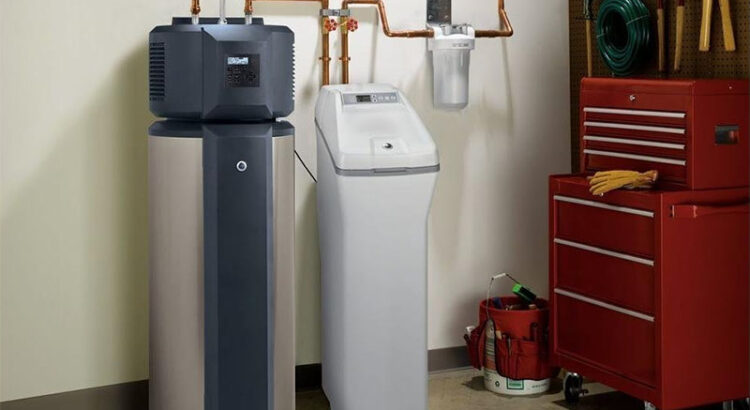
In general, water softener installation needs some critical selection factors, which ensure it works efficiently and serves you for a long time. First, check the household’s water usage and the degree of hardness in your water. Households with more occupants or very hard water require systems with high capacities, competent in removing more minerals before regeneration might be required. The main features to look out for is a demand-initiated regeneration, which ensures that the system renews itself only when necessary, saving water and salt compared to timer-based systems.
Also, consider a water softener installation that has additional benefits, such as removing sediment, chlorine, or iron, for an all-around water treatment system. Consider convenience features like low-salt indicators, and bypass valves that make maintenance easier and more user-friendly.
Determine Your Water Hardness and Usage
The first thing the house owner needs to do is to measure the hardness of the water and determine how much of it is used each day. Water hardness is measured in regard to grains per gallon. The higher the GPG level, the harder the water.
This can be done through the use of a test kit or contacting your water utility. Of course, you should know how much water your household uses to make a more informed decision.
Calculate the Right Portion of the Water Softener
It is important to size a water softener based on two variables: the scale of your water hardness and your daily demand. These will need to be calculated into an equation that determines the grain capacity required. Simply multiply your water hardness in GPG by your daily demand.
For instance, if you use 2gallons daily with water hardness of 6 GPG, you’ll need a softener that can handle 2,000 grains of hardness per day. Additionally, consider the regeneration cycle—an efficient system should regenerate every 7 days to maintain energy efficiency.
Choose Between Salt-Based Versus Salt-Free Systems
Today, primarily there exist two types of water softeners in the market: salt-based and salt-free.
Salt-based softeners, in any form of an ion exchange process, remove all calcium and magnesium from your water, replacing it with sodium in the process of softening.
Consider Budget and Certifications
Your final decision should take into consideration your budget and exactly how much the certification means to you. With certified models, they could be a little costlier in price, but they do bring in that feel of assurance in quality and safety.
Not all non-certified models are bad performers, and come without the additional cost of certification. Prices should be compared, and customer reviews read, to make sure the chosen system will meet needs and be within an affordable price.
Conclusion
When choosing the best water softener, you have to consider your water’s hardness, your household’s usage, and the system type. Proper sizing considering your budget will help in making a well-informed decision that will improve your water quality and home efficiency.
The above article has discussed how to choose the best softener, and you can reach out for more details.